Shaming Our Mothers

img_9943

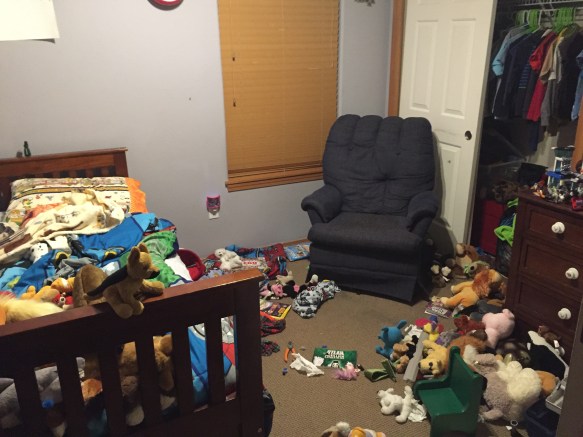
When my son plays by himself, I shamelessly eavesdrop on the running commentary.  It’s often funny and charming, and it gives me a window into what the quirky little guy is thinking or feeling that day.  Once, with his little plastic animals, I overheard one animal tell another this:

“Now you have to go home and see what your parents think of your bad choices.”

This was said with more than a hint of satisfaction.  Naughty Critter was definitely in for it, and Sensible Critter was enjoying it.

No matter how old we get, that still resonates.  If you have (or had) any kind of relationship with your parents, you care what they think about your choices.  You want them to be proud of the work that you’re doing.  You want to take your mom to the Oscars and watch her enjoy How You Turned Out.  It’s normal and loving to want your parents marveling at your good choices.  (For ease, I’m going to shorten “parents” to “mom” here, but it could be either or both.)

But…. what if your art pulls you in a direction that you think your mom isn’t going to like?  Writing books for children is in this way an easier choice—nothing controversial, few opportunities to use f#%*, nothing to ruin Thanksgiving.1  I have several books for children in the works, and it’s nice to know that my mom will be able to read these without feeling like she needs to have a “talk” with me.  Writing for adults, about adults, gets a lot trickier.

When I’m not writing for children, I’m writing psychological horror stories.  If I’m being honest, they are better work.  The dark humor and complexity of these stories is something I’ve worked hard at, and it shows off the best of what I can presently do as a writer.  And…that’s the problem.  Aside from issues of readership, where people have trouble separating different types of work, how do I tell my mom I’m going to publish a story collection called “Bitches and Dead People”?2  Will she get the vapors or will it be Tuesday?  It’s probably somewhere in the middle, but here’s some things to think about.

Your mom is not actually a satellite of you.  We spend our whole lives thinking of our mothers in terms of how they relate to us.  The child’s narcissism in relation to his parents never really goes away.  Because of that, we forget that our moms had (and still have) lives that do not revolve around us.  She was probably reading The Clan of the Cave Bear series and enjoying those sexy, sexy Ayla/Jondalar scenes while you were at elementary school.  She might have even snuck a peek into that “50 Shades” book.  She probably enjoys other things we are completely unaware of, like pina coladas and getting caught in the rain.  Let your mom be a fully formed, three-dimensional person in your mind for a few minutes and see that you don’t necessarily know much about her.  There are big chunks that aren’t filled in.  Don’t presume that there aren’t.

Moms have a past and they have made their own bad choices that they don’t share with us.  Let’s be really clear, we do not want them to share this unless it is an extremely important teachable moment.  That is all I’m going to say about that.  Just no.

You can’t parent your characters into behaving as your parents would expect them to.  My mom has opined that curse words are the refuge of the lazy.  When I am writing humor, or an opinion piece like this, I think that’s probably mostly correct.  If I work a little harder, I can come up with something just as funny or precise or better.  When I’m writing fictional dialogue or inner monologue, though…well.  My characters did not have the benefit of this wisdom.  They are Flawed, and it shows.  If I sat with my Flawed people and fretted, “Oh, my, what will people think of the naughty language, oh dear,” my Flawed people would also be Unbelievable.  I can’t parent my characters and chronicle their true selves at the same time.  They are gloriously broken and that’s what makes them interesting.

Censoring yourself because of what you think someone might think is proactively timid.  I don’t know what my mom and dad are going to say to me when and if they read my work for adults.  They don’t have to read it—my mom doesn’t like horror stories anyway, so maybe she won’t read any of it, or I’ll just print out the ones that aren’t especially scary for her.  That’s her choice, though.  Maybe she’ll tell me that she thinks they’re terrible and belong in the trash can.  That wouldn’t be nice, but it would also be disrespectful for me to presume that I know what’s good for her.  This is where we have to be adults, two of them, and say, “You might not like this, but I hope you can appreciate it.”

As a last thought, I called this little thing “Shaming Our Mothers” for a reason.  Most of us would rather not, and we spend energy trying not to be an embarrassment to the people who love us.  Maybe, though, we don’t know what that means in the one place where it’s meaningful.  Let your mom be a real person for a minute, and then give her the chance to decide whether she’s shocked and disappointed in your bad choices for herself.  It might be surprising for you both.


1 Hey, I’m not saying it’s impossible.  Maybe your character has three heads and Aunt Linda is part of that “One Head” movement, and she decides to create a fuss over the turkey and the stabbings commence.  It’s just a lot less likely.

2 Hi, Mom!  Guess what?

The Only Princess I Could Be

leia-bun

I started elementary school in 1979.  That’s roughly two years after Star Wars: A New Hope was released, and about a year before The Empire Strikes Back hit the theaters.  Empire was the first movie that my parents took all of us to see, and I vividly remember the experience.  I don’t know if I’d seen the first movie on TV already, but I knew all about it.

I was a strongly opinionated little girl with no tolerance for bullshit and no interest in dolls.  I never lasted long in groups of girls.  They either played some mind-numbingly boring games involving feeding babies over and over, or they spent their time cruelly dividing each other up in order to hurt as many feelings as possible.  They didn’t DO anything.  I wanted to run and jump and use my imagination.  I wanted to have the chance to lead, to pick the adventure.  The girls included me only so long as I played by their rules and stayed in my place.  (Still very bad at staying in my place.)

Something amazing was happening in those years, though.  The boys at school spent every recess playing Star Wars games they’d made up, and I knew Star Wars.  I wanted to play, too, and because of Princess Leia–they needed me.  They didn’t just tolerate a girl playing with them, they had to welcome me and give me equal footing.  I was a part of decisions, I could save the day, and my ideas were just as valid as any the boys had.  During those years, I had a place where my strengths were celebrated as assets.  It was powerful stuff.

Of course, it changed as the boys moved on to Dungeons and Dragons and the girls got meaner.  David Brickey pushed me off the Big Toy and I hit him on the head with my Holly Hobby lunchbox.  Star Wars faded, and the games the boys were playing involved sports (let me tell you how many different kinds of athletic equipment have hit me in the eye) or sound effects that the girls used to mock me without mercy.  The Dungeon Master didn’t have the foresight to realize he would want to date me in high school, and didn’t let me join his campaigns.  I was gently nudged out of the boys’ world and had no place with the girls.  They didn’t want a Leia, they wanted followers.  I couldn’t do that.

It wasn’t all gloom and lonely pre-EMO moping, though.  There was a lot of that, don’t misunderstand, but I also carried that feeling–the truth that inside, I was just as worthy as Carrie Fisher’s unapologetically powerful Princess–for the rest of my life.  When my career was threatened by a traditional firm because I was “abrasive” and “challenging,” I found a better job and left.  I learned a little diplomacy and softened my rough edges, but I never surrendered my fire.  Neither did Princess Leia, and neither did Carrie Fisher.

Thank you for giving a square peg of a little girl the courage to argue that there ought to be a square hole, and a woman the strength not to strive for equality, but to assume it.  I owe you one, my Princess.  More than one.

Tree Pose

img_9058-3

backyard apple tree
Fuji with aspirations
of being Fiji

Our apple tree molted in this particular pattern this year. The recent snow made it all the more apparent that it’s been looking at the neighbor’s palms and dreaming big dreams.

Introducing: The Tiny Giant

img_8777

Okay, fortune cookie.  I did.

Here’s an elevator pitch for The Tiny Giant, the novel I’ve been working on for nearly three years.

The Tiny Giant follows the adventures of a very small giant and a suburban boy with a big imagination, brought together to explore a hidden landscape of magical beasts and threats in a struggle to right a centuries old injustice.

Boiling the 70,000 word novel down into 40 words is an exercise in beating one sentence to death, but I’m getting close.  The Tiny Giant is a suburban fantasy, a novel set in familiar surroundings for many of us.  The lush green Pacific Northwest provides a beautiful, albeit damp, backdrop.  Imagine waking up one morning to find that you’ve been brought into a world you never knew existed, just because you planted a seed on a whim?

Dan, one of our two protagonists, is a 12-year-old boy with a fairly normal life until he meets Zeeble, the 18″ tall giant in his garden.  Everything goes a bit sideways from there.  The woods behind Dan’s house are not what they seem, and a world Dan never suspected brings him new wonders and dangerous enemies.  Exploring themes of loyalty, justice, and making up for the mistakes of the past, Zeeble must overcome centuries of inaction to do the only right thing.

As for me, I’m preparing the cover letter and other materials to submit to agents and publishers.  I’m working out what the second novel for these characters looks like, and I’m excited to start writing it.  The working title is The Unnatural Giant, and after writing about 150,000 words in total to get the first book ready for its close-up, I suspect I’ll be a little better at it this time.

I’ve had that fortune from a long-forgotten restaurant for about 10 years.  I’ve spent three years working and reworking The Tiny Giant.  I have never been more nervous about being a novelist than I am right this minute, on the verge of rejection or acceptance.  And we step off the high dive and …. see what happens.

How could anyone not write a novel set in these woods?

How could anyone not write a novel set in these woods?

On School Days, We Write

image

I finished rewriting The Tiny Giant at the beginning of August. I let it sit for three weeks to redistribute the juices before I read it.  Honestly, I was scared to tears of it.  Here’s why:  I worked really hard for six months rewriting it, and maybe it wasn’t any better.

That rewrite was the most painful writing I’ve ever done.  The new book is about 10,000 words shorter, but more than that, it’s almost unrecognizable.  A different, better writer did this version.  I learned so much writing 150,000 words over the last two and a half years.  A lot of those words didn’t survive, and some of them are different stories, but they were all critical to getting here.

Two weeks ago, I finally read the new manuscript.  You know what?  It’s good.  I have a handful of things I’d like to change, but it’s nothing like that half-in, half-out thing I did right before it, the in-between the First Reader draft and here.  I’m all in, and it shows.

What did I actually DO differently?  I gave myself permission to write whatever needed to be written, even though it’s aimed at a YA audience.  I will probably go and scrub the one time I wrote “FFS” in the dialogue–that was just a placeholder–but moving the intensity up gave it higher stakes.  I practiced writing in different formats, short stories and etc…  This cut my rambling descriptions down naturally, gave me better economy and impact.  I made myself uncomfortable.  I took chances, and I wrote from a highwire instead of a comfy nursery glider.

The kids are in school now, and I have longer blocks of time to edit and fix the little things.  I need a coherent synopsis and a cover letter to send out.  End of September?  You betcha.  I’m excited to get there.  That doesn’t mean I’m not procrastinating… like writing a blog post about it…but I’ll get there.

Sink

image

               Officially notified, she sat down at her desk, staring without seeing.  There was something she had to do, but she couldn’t figure out what it was.  This was all wrong, and they were expecting some sort of response.  Her eyes roved across the items on her desk, on her shelf next to it, pens, notebooks, should she write in a notebook?  Stab into an artery with one of the pens? 

               She stopped at the little bottle of Higgins ink.  Unopened, purchased for some creative urge that was never satisfied.  She carefully tore the top of the box and pulled the bottle out by the rubber dropper.  The others shifted, uncomfortable at her silence but unwilling to break it.

               She grasped the bottle with her left hand and turned the dropper lid with her right.  Not that old, then.  It opened easily.  She squeezed hard, forcefully, then closed her eyes and released.  The full dropper was pitch black, the liquid form of a vaporous emotion.  She cupped her left hand and let the drops of darkness fall into it, splashing, filling her palm, small spraying dots marking her white desk.

               The dropper went back into the bottle.  She put her hands together, floating the ink evenly across her palms, like she did with her moisturizer every morning while Adam was in the shower.  Adam would not be in the shower tomorrow.  She pressed her hands to her face and pulled the color of hollowness across both cheeks, her forehead, her eyelids, scrubbing it in.  The outside would reflect the inside.  This was right.  This was what she was supposed to do.

Eternal Restroom

image

I know you’ve been tempted to follow Death,
But don’t open that door, you’ll be mortified.
Yes, of course I want to keep you here…
It’s just…the afterlife is occupied.

Note: And with that, we’re done here. 31 poems in 31 days, from a campsite, from my office, from my heart and from my juvenile sense of humor. I saved this for last, because the picture is very … final. I would love to know if anyone has a favorite; I suspect it would be different from mine! Now we go back to the usual sporadic Bad Poem-Every-Once-In-A-While schedule, which might be weekly (ish). Thanks so much for being here. Any comments about the experiment welcome.

Now, with school starting, I will edit The Tiny Giant (oh, yeah, I finished the manuscript rewrite in early August…more later about that) and write some more of these dark twisty short stories that have been rattling around waiting their turns. I’ll see you all early next week with a grim little piece of microfiction called “Sink.” Since we’re into experimenting and all…

No, Mrs. Johnson, I Never Did Improve At This

image

I bought one of those books–
Coloring for adults.
They evangelize them so much,
It’s like they’re forming cults.

“It’ll relax you!” they said,
So I got out my shiny pencils.
I sat and scribbled and scratched.
In five minutes, I was mental.

The stress involved in choosing
Colors for each insanely tiny space
Was “relaxing” an agonized grimace
Onto my tightly scrunched up face.

If you’re into this crazy fad,
Please don’t let me yuck your yum.
Deep inside, I must still be five,
Yelling, “Coloring is dumb!”

Note:   Mrs. Johnson was my first grade teacher.  She despaired at my terrible pencil grip for as long as I knew her.  Also, I bet you’re dying to know what I’ve saved for last. Me too. Tune in tomorrow to find out what’s running the last leg of this relay.

Horizontal

image

Very often when I’m cleaning,
Excavation is the goal.
Resurfacing the counters
That disappeared so long ago.
In what seems like seconds,
Crap sprouts like frickin’ weeds.
All our junk in giant piles,
Like chronic skin disease.

Note:  This is not what I consider a “giant pile.”  This is almost cleared off, thank you very much.

Murder Me, Please

image

When my time comes to go,
I’d like it best to be
A murder most heinous
Like on mystery TV.

I’ll leave Cabot Cove
On a sheet-covered stretcher
Under the penetrating gaze
Of Miss Jessica Fletcher.

A Franklin Terrace gang hit
‘Cause I got crossed in The Wire.
Trampled by horses and branded,
A puzzle for Longmire.

Miss Marple would do for poison
Some ex-lover slipped in tea,
But call DI John River
If the investigation needs ESP.

My little gray cells are splat?
Then get the fine cells of Poirot.
If the murderer’s overconfident–
Take him off guard, Columbo.

DCI John Luther
Will kick ass whenever required.
Remington Steele will give his bond
To see the murderer retired.

No? You’d rather a gentle end
At Midsomer-by-the-Sea?
I’ll still get my grisly death
And you’ll have to call Barnaby.

Note: Obviously, I love me a good TV murder mystery, old or new. I just started watching “The Killing” on Netflix, and I’m looking forward to seeing where it goes. All time biggest favorite? Probably “River,” also on Netflix. That’s a masterpiece, and believe me, I have a LOT to compare it to–gorgeous story and fantastic performances. I read a lot of mystery novels, too. I find it relaxing to follow the detective and see where he/she goes. Being a type-A, it’s a relief when somebody else is responsible for something, even fictitiously.

Also, for those of you following along at home: I worked on the deck rail today. Here’s a shot of some of it actually done. I’m going to make sure I get all the spots I can see out my windows first.

image